🔔 We've moved! Visit our new blog at dynamichealthit.com/dynamic-blog

Tuesday, April 26, 2016

CCDA Implementation-a-Thon II: Chicago

HL7 International, the standard bearer for healthcare information exchange, has kept up its hands-on approach with implementers and developers. One of their newest offerings is a series of Implementation-a-thons for C-CDA. As we did in Orlando, our team traveled to take part in the C-CDA Implementation-a-Thon this month in Chicago.
HL7.org

After the Orlando meetup, we were looking to take a deeper dive into the standard and share what we had been working on since January.

One of HL7's stated goals for the event was to "identify issues and potential trouble spots" in the CCDA. While some of us in the room are nominally competitors, we are all united around the common goal of making CCDA use and implementation as easy as possible, resolving ambiguities in the standard and working toward greater interoperability. EHR firms such as Epic and NextGen and a range of other developers, users and experts were all in the room, working toward this shared goal.

The collaborative spirit was encouraging, though some of the major industry players have been missing. This can make it difficult to coalesce around a decision on how to overcome major roadblocks to interoperability.

As is often the case at Connect-a-thons and other healthcare IT meetups, there were plenty of new faces, an indication of the growth in interest and a reminder that the standard requires ongoing outreach and education.

Here's a quick and dirty rundown of some key topics covered, followed by a few of our observations on specific discussion areas:
  • Implantable devices
  • Gender identity: administrative gender and birth gender
  • "Assessment and Plan" vs. "Assessment" and "Plan of Care" 
  • Approaches to "no known" value (allergies, medications, problems, etc.)
  • Discharge Medications (v1.1 vs. v2.1)
  • Care Plan: when to send, defining sections
  • ONC C-CDA test data review and import
  • Human readable vs. machine readable format and its effect on interoperability
  • Medications: approaches to recording a "tapered dose"

Implantable devices

PHOTO: Boston Scientific
A key question around implantable devices - a class of equipment that includes artificial joints and pacemakers - is where the implant should be recorded in a C-CDA.

Does it go into "Procedures,""Medical Equipment" or some combination of the two?

For ONC Certification, it is expected to be in "Procedures" section, unless there is no implantable info, then it lives in the"Medical Equipment" section. At the Implementation-a-thon, HL7 further clarified that the implantable device information should always appear in the Medical Equipment section. When the specific procedure for the implant is known, it should also go into Procedures.


Gender identity

There is not yet an agreed-upon standard in healthcare data for distinguishing the sex of the patient as determined at birth from other notions of gender identification.

HL7 currently uses the concept of administrative gender, defined as "the gender of a person used for administrative purposes." FHIR, which built upon RIM, can incorporate XML resources to capture gender identity, but the best practice has not been decided.

In the case of a transgender male - whose birth sex was assigned female and whose current gender identification is male - SNOMED codes are capable of capturing this distinction. Common practice in C-CDA would most likely record the Administrative gender for this patient as female.

As HL7 explains in its current detailed descriptions:
(G)ender may not match the biological sex as determined by genetics, or the individual's preferred identification... Systems providing decision support or enforcing business rules should ideally do this on the basis of Observations dealing with the specific gender aspect of interest (anatomical, chromosonal, social, etc.) However, because these observations are infrequently recorded, defaulting to the administrative gender is common practice. 
That last sentence gets at the fact that even the underlying process for recording gender identity and sex assignment is in need of clarity. There is no single approach, for instance, to mapping gender as recorded on an intake form with relevant C-CDA sections.

The Implementation-a-thon also explored the example of administrative gender as represented in 'UNK' nullFlavor, paired with an observation recorded in Social History. The general guidance from HL7 is that gender identity concepts should appear in"Social History,"while the "pending guidance" on birth sex is as follows:
C-CDA recordtarget/Administrative Gender is the field used to record the Birth Sex and must be coded as follows: M (male), F (female) or a nullFlavor of 'UNK'.
However, there will be further clarification coming from ONC and report back to the group.

Future considerations on this subject:
  • Some Clinical Quality Measures require a reliable location for patient birth sex.
  • Similarly, certain genetic predispositions and Clinical Decision Support in general also require birth sex, but not at the expense of multiple conceptions of gender identity.
  • Which concept of sex or gender identity should be used in patient matching across data sets?

The discussion centering around this issue further underscored the need for all major players to take part in the shaping of the standard in order to avoid confusion and incoherence.


Lessons Learned

HL7 events never fail to be highly educational. Among the takeaways for us:
  • As the C-CDA standard becomes increasingly flexible and interoperable, wide participation in dialogue and educational outreach are esssential
  • Recording of gender identity and sex will likely be unresolved until an industry-wide consensus can be achieved across major providers, EHR developers, payers and policymakers
  • As the standard and certification testing evolve, development practices must follow suit. The new testing tool is a great help in this process.
  • Translation codes for alternate value sets should be used whenever possible, rather than rejecting a C-CDA outright.
  • More focus is needed on reconciling discrete values in machine readable with the text description in the human readable portion.

Monday, March 7, 2016

HIMSS '16 Las Vegas: Key takeaways

As the HIMSS Conference continues its growth, there is risk that attendees will lose the signal in the noise. But the event continues to defy expectations by delivering both volume and value (to borrow a popular healthcare line).

Held this year in a city built on distraction, HIMSS '16 was rich in substance: educational opportunities, personal engagement and accessibility by even the largest organizations and agencies.

Dynamic Health IT once again hosted a booth with our partners at MaxMD, conveniently located near the Interoperability Showcase. We enjoyed seeing new faces, catching up with old friends and immersing ourselves in everything healthcare IT. We also ventured out from the booth to take advantage of the vast landscape of HIMSS programming.

What follows are key takeaways from the conference, with a focus on interoperability and clinical quality measures (CQMs):

CQMs: finding common ground

During the conference, we talked to a lot of attendees about their experience with CQMs - both in-person and through social media - listening to their needs and concerns on issues from data extraction to final submission. We came away optimistic about the flexibility of CQMsolution to meet client needs on this spectrum and the advantages of being a Data Submission Vendor (DSV) to assist customers through final submission.

There is a truly dizzying array of quality measurement programs (and measures), but there are also concerted efforts to get them on the same page. In particular, CMS' MIPS program seeks to align the Physician Quality Reporting System (PQRS), the Value Modifier and the the Electronic Health Record incentive program into one program. There is also increasing use of eCQMs by private insurers, as reflected by NCQA's eMeasure Certification.

Checking in with DeSalvo and Slavitt

There was great interest in the Wednesday afternoon talk featuring Karen DeSalvo, National Coordinator for Health Information Technology, and Andy Slavitt, Acting Administrator at CMS.

One of our most-liked HIMSS '16 app posts was a quote from Slavitt during the discussion: "Interoperability is a means to an end."  This point was at the crux of the Interoperability Showcase, which featured patient-based stories as a reminder that data flow should always be in service of patient care. On the physician side, Slavitt offered a reminder, through emphatic quotes by physicians in the field, that EHRs are failing doctors in some fundamentals ways.

Slavitt openly acknowledged that Karen DeSalvo was the more positive of the two and this was certainly in evidence when she reminded the audience of the immense progress that has been made since the inception of HITECH certification. She cited, as HHS Secretary Burwell did, the fact that 75% of physicians now use EHRs.

CMS and ONC: In Real Life

One reason why real life conferences still matter: the opportunity for face-to-face, personal interactions with people driving policy in large government agencies. Not all questions are easily resolved by a phone call or a quick scan of a webpage. And it's nice to have the human side of what can sometimes be perceived as faceless organizations.

We met with CMS and ONC officials to discuss specifics about quality measure reporting. This collaborative spirit, reflected in initiatives such as the recently-announced ONC Tech Lab, is encouraging to see.

Quality Measure Testing Tools

Anyone who missed the MITRE sessions at HIMSS '16 missed a lot. At DHIT, we have been closely-involved with MITRE's Cypress and BONNIE tools, which assists in our quality measure development, testing and validation. MITRE previewed some exciting new features in these tools (such as a BONNIE API).

Interoperability Testing gets FHIRed up

Dynamic Health IT's booth neighbored the Interoperability Showcase, so we're naturally a little biased here. MITRE spoke on their FHIR-testing tool called Crucible, which includes over 200 tests and a testing vertical just for API.
DHIT with FHIR Chief Grahame Grieve

Along with ConCert, HIMSS' own interoperability testing and certification process, it's clear that the industry is making very concrete commitments to defining what is and is not interoperability. ConCert includes a self-service Interoperability Testing Tool that will help developers incrementally test as they progress toward true interoperability.

As always, we enjoyed spending some time with FHIR architect Grahame Greive. There were, of course, plenty of #FHIR puns to go around:

Direct Trust expands its reach

Our discussions at the booth (and beyond), brought home the point that Direct protocol can be used for much more than just Transition of Care (TOC). Attendees were pleasantly surprised to hear "Yep, Direct can do that" in response to a number of use cases, including secure messaging via mobile device.

APIs
This really deserves its own post, but you really couldn't go anywhere at HIMSS '16 and be out of earshot from someone discussing APIs. Part of the "Interoperability Pledge" fostered by ONC, involved a commitment to using APIs.

We can certainly attest to this growth through our own work with API development. And I don't think we're alone in eagerly awaiting an API for clinical quality measure submission.

Peyton under center (stage)

The recently-retired Broncos quarterback spun out some inspiring quotes for the crowd:
"Football is a game. Revolutionizing healthcare is a mighty endeavor." 
"Pressure is what you feel when you do not have a plan. Be prepared. "
As a reminder that health IT cuts across nearly every industry, Manning was joined after his speech by a physician who spoke about the NFL's EHR system. We swelled with pride to see two New Orleans Natives (DeSalvo and Manning) giving high-impact speeches at the conference.

HIMSS '16 New Y-- err, Las Vegas.

Tuesday, January 26, 2016

FHIR Orlando: Getting up to code

FHIR Connectathon 11 took place in January 9 and 10 in Orlando, FL. As with every stop on the FHIR circuit, evidence of steady growth in the standard was in abundance. Look no further than the furious coding that took place in a crowded hotel conference room.

Credit: Bill Dickinson

At Dynamic Health IT, the focus of our FHIR development has been on clinical quality measures and patient-accessible data. We continue to refine our approach in these areas to match changes both in the standard and how it is understood and implemented in practice. Seeing the diversity of application using the standard– owing largely to potential for resources to be self-defined – reminds us why FHIR has become an increasingly essential building block in our product development.

Appropriately enough, the Connectathon has now expanded to eleven tracks – ranging from basic patient management to financial services to genomics. As a form of introductory track, implementers perform the following tasks in the "Patient" track (Track 1), against their own or an available FHIR test server:

  • Register a Patient
  • Update a Patient
  • Retrieve Patient History
  • Search for a Patient (using name)

HL7 International also offers four tutorials earlier in the week for those looking for a primer on the standard.

There were plenty of new coders in attendance in Orlando, which speaks to current developmental climate for FHIR. Roughly half of the attendees raised their hand when asked if this was their first Connectathon, It's worth noting that while FHIR is growing up, it is still a relatively young standard. Let’s not forget that HTML, often used as an exemplar for FHIR, was proposed in 1989 and is still undergoing major adaptations reflecting the evolution of the Web.

As Grahaem Grieve announced in Amsterdam, FHIR will now be a "working standard," reflecting the fact that it is being implemented in production environments, but still has many core elements subject to change. The move from a draft standard toward a "balloted" standard is due to take place officially sometime this spring.

This new-found maturity was evidenced in the shift toward implementing servers. There is now a major emphasis being placed on rigorous testing against servers. Vendors are presenting production-level products for testing FHIR servers and robust patient test decks are being rolled out to meet the demand.

It was great to again see a capacity crowd for this event (hopefully not a "FHIR hazard"). The ability of FHIR to realize all of its potential has much to do with the strong community it has built.

Monday, January 11, 2016

Welcome to 2016: HIMSS '16 Las Vegas, FHIR and more

The New Year is a time for reflection. At the pace the health IT world is moving, reflections must be followed quickly by actions.

As the calendar turned over, Dynamic Health IT took a moment to look back on a successful 2015. It was a year that included ambitious upgrades to our products, a wide range of fulfilling client work, a website refresh and some exciting new directions for our company (expanding our involvement in FHIR and PQRS, to name a few).

But we don't like to rest on our laurels for long. So we're also looking ahead to just a few of the things 2016 holds in store...


Photo: chensiyuan

What happens in Vegas stays in Vegas - unless of course you attending a massive health IT convention. In that case, you're going to hear about it all over social media for five solid days (you're probably hearing about it already).

From February 29 to March 4, our industry will converge on the Sands Expo and Convention Center. Dynamic Health IT will be exhibiting with MaxMD and you can find us both at Booth 12251. We're once again looking forward to spending some time with old friends and collaborators, as well as hearing some new stories.  

We'll be sharing the fruits of our labor in 2015 and previewing some new developments for 2016, particularly in our Patient Portal and CQMsolution product lines.

Clinical Quality Measure Development
Having wrapped up a rigorous CQM development cycle in 2015 -  which included user interface upgrades and support for Cypress 2.6.1 - we are looking ahead to supporting measures for the 2016 reporting year and bringing our CQMsolution software into line with v2.7 and subsequent v3.0 Cypress upgrades. In addition to wider support for PQRS measures and other enhancement, this will be another year of big developments in CQMs.

CCDA 2.1 
This new draft standard for trial release (DTSU) of the Consolidated Clinical Document Architecture standard was released for comment last July. Vendors who are certifying under 2015 Edition will need to support both v1.1 and v2.1 releases and produce three flavors of C-CDA: CCD (v3), Discharge Summary and, for inpatient providers,  Referral Notes.

Just last week, DHIT took part in a Implementation Connectathon, exploring best practices for parsing and displaying these CCDAs alongside HL7 International, ONC and leading EMR systems. As HL7 continues to update the CDA framework, we will remain on the leading edge, updating our software so that our clients are well-positioned for the latest edition of EHR certification and industry standard changes in general. 

FHIR
Over 2015, Dynamic Health IT was an avid participant in the FHIR community, attending Connectathons, releasing a new FHIR white paper and working toward FHIR development goals (including the testing of clinical quality measures with a FHIR server). In fact, as this post was being written, a contingent of our DHIT team was in Orlando for a FHIR Connectathon. 

This year promises another full slate of FHIR events, ongoing community dialogue and new steps toward wider implementation of the standard. FHIR is now considered a "working standard" and should continue to progress in the steps of maturity as outlined by architect of the standard, Grahame Grieve.

Please do not hesitate to share concerns or questions about the upcoming policy changes and requirements with DHIT. We can reach out to ONC and CMS on our bi-monthly calls and other contacts to ensure that you have the latest intel.

Look out for more updates from our shop in our February Newsletter.


Wednesday, December 2, 2015

Clinical interoperability and FHIR

FHIR Developer Days came to a close the Friday before Thanksgiving in Amsterdam. FHIR mastermind Grahame Grieve capped off the proceedings with a keynote address:


Graham discusses FHIR's evolution beyond "draft" status and some of the philosophical and practical considerations as the standard grows up:

  • FHIR will now be a "working standard," reflecting the fact that it is being used in production settings, but not yet etched in stone
  • Levels of maturity for advancing the standard - which are largely community-driven - toward becoming "normative" 
  • Packaging FHIR resources and making them more accessible and easily-interpreted, with a process that can be better understood by non-programmers
  • The importance of considering who is served by data interoperability, not simply the flow and efficiency of information exchange; 

To this last point, for those trying to place FHIR within national interoperability efforts, Grahame attempts to lay out the ultimate goal of the standard development:
Data interoperability is all well and good but it's not the outcome that we need. The outcome that we need is clinical interoperability... My (definition) of clinical interoperability is the ability to transfer patients between care teams and provide seamless provision of clinical care. That is the interoperability that matters and will make a difference to people's lives.
What is considered data continuity for healthcare practitioners may not serve the needs of patients; yet the goal of a truly patient-centered, portable record will have to prioritize the healthcare user above all else.

***

There's still a lot to unpack from Amsterdam, In case you missed it, Developer Days also featured:
  • Presentations from FHIR principals Lloyd McKenzie and Ewout Kramer
  • API development in Java and .NET
  • "cheat sheet" with tons of useful FHIR info (compiled by Developer Days host Furore)
  • An announcement that IHE is updating FHIR Profiles to align with DSTU2
  • An announcement of a Notepad++ plugin for FHIR
  • Trophies!
See you around the FHIR place.

Tuesday, November 17, 2015

FHIR Developer Days in Amsterdam

Amsterdam (CREDIT: Massimo Catarinella)

International FHIR Developer Days takes place this week (November 18-20) in Amsterdam. The event is hosted by Furore, a Dutch health IT company that has been active in FHIR development. Furore maintains an open-source FHIR test server called "Spark."

The three FHIR project leads ("FHIR Chiefs," as we like to call them), Lloyd McKenzie, Grahame Grieve and Ewout Kramer will all be in attendance. The event promises to be another great opportunity for cross-industry training and collaboration.

And, as with all FHIR Connectathons, there are tracks. Via the FHIRplace, developers will be encouraged to work in the following lanes this time around:
  • Patient: Create, update and search patients 
  • Terminology Services Track: expand valuesets, validate codes and retrieve human readable labels codes.
  • Profile & Validation: Create a profile and an instance; ask a FHIR server to validate the instance 
  • "SMART on FHIR" track: Extend FHIR servers or build a client to add OAuth2 to the FHIR REST interface
  • Imaging: Imaging results using Digital Imaging and Communications in Medicine (DICOM) standard
  • API Beginners Track: For those just starting out with FHIR client applications
  • Community Track: Presentations of real life experiences with FHIR (schedule for those is found here)
The full program of events for Amsterdam is here.

We are looking forward to following the action and international perspective this week. As always, interoperability benefits greatly from frequent, iterative collaboration and a broad range of players from across the globe.

And stay tuned to this blog for new content on our current FHIR development.

Wednesday, November 4, 2015

The CQMsolution Story

Dynamic Health IT first began assisting EMR clients with HITECH certification in the summer of 2010.

Known originally in the 2011 Edition (Stage 1) as 170.304 (j) – and now 170.314 (c)(1), (2), and (3) - the requirements for supporting Clinical Quality Measures (CQMs) proved to be a sticking point for many vendors looking to certify.

Some of our clients who had certified under 2011 edition had done so successfully with the application popHealth for CQMs, a product targeted to Ambulatory (EP) providers, under Stage 1. But users had grown frustrated with the implementation process, one that included difficulty importing data, delayed updates for known issues and virtual machines for various Windows versions that were cumbersome to use.

This frustration was compounded by the 2013 government shutdown that lasted two and a half weeks and affected support and continuity for a host of Health IT-related programs. This put another layer of pressure on vendors facing certification deadlines.

When the 2014 edition of certification standards rolled around, popHealth was not yet certified and ultimately would transition to open source. While DHIT has been involved in open source projects at various, the time-sensitive nature of certification pressed the limits of using open source to build and maintain a certified software package.

PopHealth was built with Ruby on Rails and our development team felt we could harness technology more familiar to our clients (C#, MSSQL) to tackle CQMs. In CQMs, we saw an opportunity to challenge ourselves and embark on some cutting-edge development. We decided to jump in head first and build an what would come to be named CQMsolution.

Our goal from the outset was to create a browser based C# application to support the 93 CQMs (both Inpatient and Ambulatory). We would have to do it from scratch, but we had the development experience and potential clients looking for a new approach.


CQMs don’t allow for a “set it and forget it” approach, so our work did not end with initial development and launch of CQMsolution.

In contrast to the pitfalls of version stagnation that can sometimes occur in open source projects, CQMsolution is subject to an actively managed development cycle. Our team seeks to stay current on updates to Federal policy and quality measure updates across programs (MU, PQRS, IQR). We attend biweekly Tech Talks with Cypress to ensure our software validates with the very latest version of eCQMs and we engage in frequent testing, assisted by an ONC-sponsored tool called BONNIE (a web-based tool primarily for measure developers that allows users to load in quality measures and create test patients).

Where there have been challenges configuring and deploying homebrew CQM aggregators in multi-entity settings, we have worked to ensure that CQMsolution sits atop a stable back-end that runs with minimal client intervention and can be centrally-configured for multiple practices.

Our latest version of the application, which works with Cypress CQM validation software (v2.6.1), includes enhanced drill-down screens and the fruits of a testing process that has increased our coverage of many "border" cases. With BONNIE, Dynamic Health IT has now generated or shared in over a thousand patients to stress-test our application.

These efforts keep CQMsolution current for our clients and on pace with EHR certification and standards.

All of this is not to say that open source does not have its virtues. It most certainly does and often leads to breakthroughs in our industry. Many of us use or even contribute to open source applications on a daily basis. But there can be important differences, especially when dealing in subject matter that is time sensitive (CQMs, check) and frequently changing (double check).

Quality measure software must be updated regularly to accommodate both Cypress validation and CMS measure releases. Meaningful support also should be responsive to client submission deadlines and other potential needs related to reporting and displaying quality measures.

As always, let form follow function.


Stay tuned for a full breakdown of 2015 Certification Updates.

Wednesday, October 7, 2015

FHIR Connectathon 10: Atlanta

The DHIT team made the trip to Atlanta last weekend for FHIR Connectathon 10. As the Connectathon series moves into double digits, there is a sense of building momentum in the project. The knowledge base for this diverse group of participants continues to grow with each event.
A quick review: FHIR is a set of clinical interoperability resources based on common web standards, including XML and JSON, with a RESTful protocol in which each FHIR resource has knowable URL. FHIR aims to provide the tools necessary for interoperability with enough flexibility to adapt to a wide variety of use cases.
Connectathon 10 took place October 3-4 and featured 6 themes (or tracks) around which real-world scenarios were built for participants to implement against a FHIR server:
  1. Basic patient management
  2. Terminology Services
  3.  Financial Resources
  4.  EHR record lifecycle architecture
  5. Structured Data Capture
  6. Scheduling
The tracking allowed participants to collaborate more easily by identifying finding complementary skills and experience. DHIT’s involvement centered on themes 1, 2, 4 and 6.

Theme 1, which deals with basic patient search and management, is designed for those new to FHIR. Theme 2 involves terminology services and is slightly more advanced, consisting of searching value sets, validating codes against a value set such as LOINC, SNOMED CT, or a FHIR value set. Theme 4 is EHR record lifecycle architecture. This theme is dedicated to auditing lifecycle events such as Patient Create or Update, Appointment Create, etc. Theme 6 concerns the scheduling of appointments using the FHIR protocol: available “slots” can be created for appointments to fill.

The DHIT team’s overarching goal during the Connectathon was to make Clinical Quality Measures (CQMs) work with FHIR. We laid the groundwork for CQM calculation by matching the HL7 Health Quality Measures Format (HQMF) templates to FHIR resources. The FHIR server was then used to populate patient demographics data, encounters and procedures.

In our CQMsolution software, we created a quality measure report using a patient search against the FHIR server to grab the necessary patient data. To retrieve the necessary codes used by the measures, we performed a validation before measure calculation for sections retrieved on each patient. After code validation passed, the calculation was completed and the results were displayed on screen. 

The FHIR mantra: button spotted at Connectathon 10
in Atlanta, GA
One of the primary benefits – and most enjoyable aspects – of a FHIR Connectathon is the opportunity for vendors to meet and test out connections among themselves. Each new touchpoint is an opportunity to break new ground in interoperability. The Connectathon environment creates a multiplier effect as these connections take place, through the testing of code and sharing of ideas.

DHIT has the chance to team up with several groups, including collaboration on patient search with Cerner and appointments with Mirth. We also had the chance to meet and discuss future development goals with leading ‘FHIR Chiefs’ Graham Grieve, David Haye and Ewout Kramer. Our discussion focused on the evolution of FHIR servers to facilitate efficient CQM calculation.

By providing this chance to share ideas with FHIR leadership and solve problems collaboratively with other implementers, FHIR Connectathons capture the spirit of interoperability as well as any event today.

We look forward to expanding the role of FHIR in our product development.  

Friday, September 25, 2015

Keeping Your IIS Site Online

If you are hosting a site with Microsoft Internet Information Services (IIS) 7.0, you should be aware of a potential bug that could take your site offline.

IIS may not always get along with your antivirus updates. DHIT recently encountered an issue in which a McAfee antivirus update causes a key DLL to stop loading and IIS Application Pool to stop, which consequently disables website hosting. When attempting to load an IIS-administered site, you will see a  503 error (Service Unavailable):

Error caused by IIS issue

The particular issue may arise if a component of your antivirus software is removed or expired. For example, your McAfee Host Intrusion Prevention client could be inadvertently updated without all necessary components, uninstalled or otherwise corrupted.

The fix for this issue is quick (and relatively painless), involving a few edits to the applicationHost configuration file.

There are other, related IIS issues detailed in Microsoft support documentation here.

While the fix for this bug straightforward, catching these issues in a timely manner may not be. DHIT uses Microsoft Internet Information Services in a variety of implementations for our applications and has experience ensuring hosting stability.

We recommend not only staying current on Windows and antivirus software updates, but also maintaining a level of support to ensure that potential issues are monitored and remedied quickly to minimize downtime and vulnerability.

DHIT offers tiers of support to accommodate not only ongoing software customization but server continuity. Please contact us with any questions about this issue and keep your health data environment running smoothly.  

Tuesday, September 15, 2015

Unclogging Data in Health IT

There has been much controversy in the Health IT world over the issue of “data blocking” – to what extent it truly exists and, if so, what to do about it.

It’s worth noting first that the magnitude of this problem may be exaggerated. As recently reported by ONC, an analysis of a nationwide survey of hospitals showed some heartening results:
(N)ear universal adoption of EHRs by hospitals and significant increases in hospitals’ electronically exchanging health information with outside providers compared to past years.In addition, there are a number of technologies available – including DIRECT protocol – that are widely available, easy to implement, but simply underused.
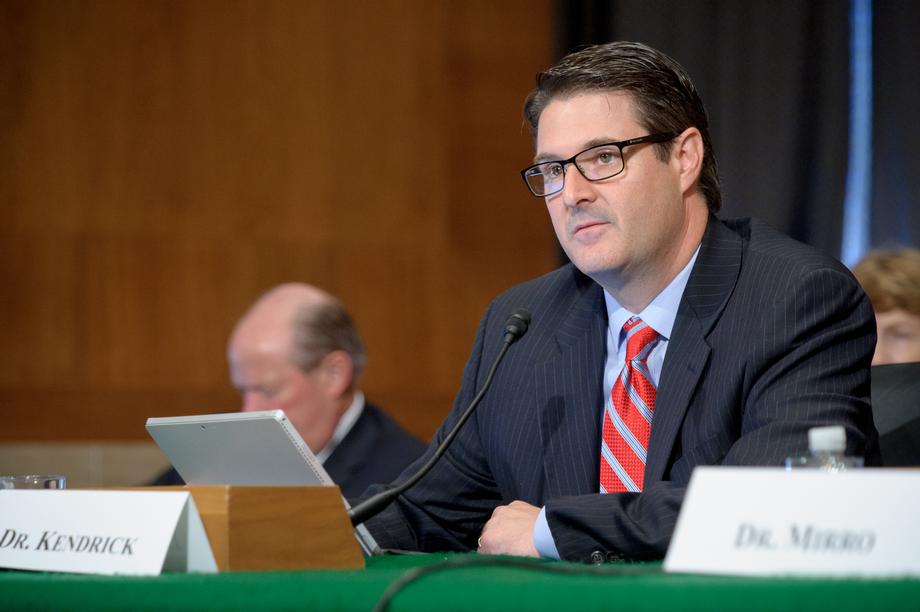
However, even if the extent to which systems are actively obstructing the flow is overblown, there is much work to be done. In testimony before the Senate’s HELP Committee on the subject of health IT “data blocking,” Dr. David C Kendrick – who leads MyHealth Access Network (a nonprofit health information exchange organization in Oklahoma) – provided some helpful guideposts.

Dr. Kendrick first gave a succinct and workable definition of interoperability, in which patients “have their complete, longitudinal medical record available wherever and whenever decisions are made about their health.”
Dr. David C. Kendrick offers testimony before
Senate HELP Committee on Thursday, July 23, 2015.

Kendrick went on to list drivers of data obstruction culled from his experience. Some specific examples include:
  • Excessive interface and maintenance costs 
  • “Hotel California” problem: vendors do not offer data portability as intended by ONC, so customers “can check out other EHR products any time they like, but their data can never leave” 
  • "Garbage in Garbage Out”: Poor data quality and standardization
  • EHR-centered development that extends interoperability only to EHR+its partners
  • Vendors achieving certification with one feature set, but features are not fully delivered post-certification
In one of the most striking moments in the testimony, Kendrick declared that MyHealth has “never seen a completely correct Patient Care Summary despite processing millions of them.” 

Where data blocking persists, incentives are lacking for collaboration. In Kendrick’s experience, provider-based blocking was a challenge early in the existence of MyHealth, but the problem has “quickly receded as valuebased payment models take hold.” “Data blocking,” on the whole, may simply be a more loaded term for the obstacles that exist in pursuit of the Holy Grail of interoperability.

It’s not easy developing a universal secondary language for health care. But it is up to health IT developers not to settle for “just good enough to pass." As an industry, we now know the ideal to which we are striving and the major barriers.

And while software developers are not policymakers, we can offer our own set of incentives for interoperability through ease of use, affordability and functionality that goes beyond mere compliance.  A good place to start is putting data-sharing front-and-center in our applications.